Same, Same, Different

how to make an impact with lists

I don’t know about you, but I really, REALLY like descriptors.

For example, if I saw a puppy, I won’t stick with “Hey friends! I saw a puppy!”. Instead, I want you to know I saw the smallest, cutest, fuzziest, energetic, happy white puppy! Which is fine when you’re speaking about puppies. But when you’re reading or writing about puppies? Too many words.

By trying to give specificity to the kind of puppy I saw, I might as well be writing you a list.

The puppy I saw was

  • Small
  • Cute
  • Fuzzy
  • Energetic
  • Happy
  • White

It’s clear, and for how many words I have there, it is well laid out. The problem comes when you can’t break your paragraph within your literary work to make a list like this. Yet, mashing all these words together puts you into a structural faux pas anyway. There are many ways to avoid this. I’m going to explain my favourite way – same, same, different.

A lot of people have heard of the rule of three. It’s a psychological and marketing trick, taking advantage of the human brain’s habit of seeking out patterns in things. For some reason, the number three is a fan-favourite pattern. Maybe because it’s related to the triangle, which is the strongest shape? That’s purely a guess, of course.

Anyway. Lists of three words feel complete. They make our brains feel happy when they read them. So if you use three descriptors to market your product, people will instinctively have a higher opinion of it than an identical product using more or less words.

Three words to make an impact. But which three words?

This is where the “same, same, different” tactic comes in.

Can you see it in these popular phrases?

  • Sex, drugs, and rock and roll
  • Stop, drop, and roll
  • Life, liberty, and the pursuit of happiness

Sex, drugs, and rock and roll. Short, short, long. Same, same, different. Stop, drop, and roll. -op word, -op word, not an -op word. Same, same, different. Life, liberty, and the pursuit of happiness. L-word and short, l-word and short, not an l-word and long. Same, same, different.

I saw the cutest, happiest, white puppy! -est word, -est word, not -est word. Same, same, different. Try it out! Let me know some sets of three that you’ve come up with. I’d love to hear about the examples you’ve used!

Also, because I’m not a jerk, here’s the puppy I’ve been talking about! His name is Mochi.

References

A Sandwich by Any Other Name

Sandwich. Noun. A type of food where there are two or more pieces of bread (or a split roll, or other starch) with filling in between. Eaten as a light meal. Alternatively, it can be two structural elements that secure a low-strength core. Lastly, it can be an open-faced sandwich when there is only one piece of bread or starch, and ingredients are placed on top of it.

Sandwich. Verb. To insert or enclose something between two other things, typically of a different material, quality, or character from the bit being enclosed or inserted.

Nope, this is not a post on my opinions regarding whether pizza is an open-faced sandwich or vice versa. Neither is it a deep dive into the myths and legends of where the term originated. I’m starting this post with a definition of “sandwich” so it can lend some professionalism to the rant that follows. I want it to descend into madness with a shred of credibility.

This post is about constructive feedback/criticism and the term “compliment sandwich.”

When was the last time you had a delicious sandwich loaded with ham, swiss cheese, fancy pickles or preserves, and greens, and called it a “rye sandwich” because it was on rye bread? In the same vein, if you told someone you were having a rye sandwich for lunch, they would likely assume you were trying to be clever and were drinking alcohol instead of eating.

So why on earth do we call it a “compliment sandwich” when the thing in the middle is something that needs to be worked on, and the outside “sandwiching” components are compliments? To make this feedback tactic reflect its name, we would need to offer up an issue, a compliment, and another issue. Alternately, we could call it an “issue sandwich”… But who wants the boss to come down and tell them they have an “issue sandwich” to deliver? Sounds ominous in the same way a “knuckle sandwich” sounds ominous to a kid on the playground.

Personally, I feel as though this tactic was introduced because of bad bosses. They didn’t communicate with their employees unless there was an issue, and that breeds all kinds of resentment.

A long time ago, I worked for a large corporate company. As an employee, I never heard a peep from head office or the regional directors unless they were unhappy with something. When I was promoted, there was a weekly call with corporate. They, without fail, offered a compliment, gave us something to work on, then ended with another compliment.

Know what’s worse than knowing you’re getting a weekly issue to work on? Knowing that your boss is obligated to come up with something you can be complimented on. Compliments don’t mean much if the person giving the compliment is required to think of something good you are doing in order to deliver something they want you to change.

In my current position, feedback is a near-daily experience. I don’t mind it (usually). We’re all trying to create the best version of our writing possible for the game. Extra eyes for things like spelling and grammar, the validation that others think lines are funny or particularly appropriate, and even the comments requesting changes are all welcome and appreciated.

When your higher-ups are not required to give you a compliment and you get one anyway, it feels genuine. It feels earned. Even if it’s just a comment that says “haha” or “lol” you know you got it because your writing was actually funny, not because they had to single it out in order to provide you with something else they didn’t like.

Effective feedback will give you a path to follow. “I don’t like the way this is written, can it be funnier?” or “I see where you’re going with this, but I don’t think it works in this context. Can I see some alternate ideas?” or even “This doesn’t sound as romantic as it should.” Point one! Ham up the punchline! Point two! Come up with a couple different ideas! Point three! Make it cheesier/more romantic!

The higher-ups here are clear with WHY they don’t like something. This may be shocking, but most employees are not psychic. The employees in this scenario are given direction and provide lines and work that is closer aligned with the collective vision for the submission.

Doesn’t this sound like a win-win? Something that would reduce time waste as employees and employers alike are clear on their path forward?

So throw out that grody compliment sandwich, make an effort to tell people when you like something, and always be open to talking something out!

Let me know if you have any favourite deliveries for criticism or feedback! I’d love to hear people’s preferences!

References

Inspiration, Creativity, and Writing Prompts

One of the things my new job has given me is an appreciation for the use of writing prompts. Don’t get me wrong, I utilized this tool when I was bored or wanted to do a writing exercise, but I had never considered it useful beyond that. Now I write for 7 hours a day (more or less), 5 days a week, and I have been gifted with the revelation of how writing prompts can be a weaponized tool against stale characters, stale scenes, and writer’s block.

We’ve all heard the advice of “just get something down,” in one iteration or another, right? Using brackets when you’re stuck [Hero does something clever], throwing the general idea down in all caps “I can’t believe you think I’m a child! I’m SOMETHING THAT’S NOT THAT, and it’s time you recognized it!”, highlighting a section, flagging it with comments, whatever, just keep going. Sound advice, right?

As one popular meme says, “Well yes, but actually no.”

Returning to where I’ve left off in a section can be like arriving in the bedroom to find my coffee pot. Why is it there? What was I doing? What were my intentions with it?

This is to say, I feel like returning to a section I’ve left off to insert content can be choppy and ultimately confusing for me and the reader.

So! Weaponizing writing prompts. Have you ever seen those “642 things to write about” books? I’ve had one since 2016 (ish) and I picked it up in the situations I mentioned in my opening paragraph. When I wanted to do a writing exercise or was bored. Admittedly, these things didn’t happen often, so roll forward to 2023, and maybe 50 have been filled in?

My plan was to write 1 full page, back and front, every day. Without fail. No matter what. I would not go in any set order, I would just flip through until I found one I thought I could do and then do the page. I’d flip through again, and select a second page, for a total of one, back and front equivalent, page.

May 31, 2023. I FINALLY got the thing completed.

I learned a few things from it. One, this necessity of having to do a set number of writing prompts really raised my productivity. Two, my willingness to push the traditional script boundaries has not only been more prevalent but has been met with more acceptance. Three, I feel as though my wit has become a little faster, a little sharper.

Most of the prompts were fun, and I challenged myself creatively to fill in the space provided with each exercise. There were definitely ones I kept passing again and again because I just had no ideas.

For interest’s sake, the two that remained until the last day, the ones that I found most challenging and least inspiring were “Find a passage in your favourite novel. Re-tell it, using only one-syllable words.” & “You are suddenly unable to recall any words that are not proper nouns. Excuse yourself from a very formal dinner party without drawing much attention to this fact.”

So, even though some days it was a slog to come up with something I thought was good, I can say I recommend this exercise. If you’re not the kind of person who wants to go out and buy a book, take one of your thousand blank journals, and grab some prompts from the internet. My personal favourite is whoever runs the writing prompt Tumblr (now apparently available on facebook?) I’ve left the URL in my reference section.

If you are at all extroverted, then I recommend taking it one step further. Go to an improv class. Having to come up with and actually articulate ideas on the fly with other people providing input is a bit scary, but trust me, by the end of it, you will be a faster brainstormer. You will feel less stigmatized about throwing out ideas which you feel may or not be good at. Let others build off of you, and in turn, build off them. Learn different ways to approach lines of logic by paying close attention to the other participants and how people react to their ideas.

It’s worth your time, I promise.

If nothing else, it will make you a little more brave, socially. If you’re anything like me, every little bit helps.

References

I Before E Except After C is a Joke

Many a day, I review things I write, or things I say, and think to myself “I’m so glad English is my first language.” Not because of the inherent advantage it gives me, but because honestly? It’s a sheer disaster of a language. I would not want to learn it, especially if my foundational language was something nice and orderly.

Teachers try and make it easier on us. They try and come up with fun little sayings to help students learn how to spell.

How many of you spell ‘beautiful’ by mentally saying “Bee-e-a-utiful”? Or ‘nauseous’ by mentally breaking it up into “Na-use-o-us” (‘No use of us’ in a Scottish accent)? How about ‘amateur’ as “A-mate-u-r” (A mate you are)?

One of the ‘fun’ rules teachers LOVED to pound into me as a kid was “i before e, except after c,” which, did you know there’s a second part? I didn’t. It ends with “or when sounding like ‘a’ as in neighbour and weigh,” which… I suppose, shortens the list of words that don’t follow the rule.

I will not lie, I sat here sounding out words when I discovered that. Science. Psy- ANCE? Sigh-Ance? Sss-iiiiiii-ence??? Weird. Wee-rd. Forfeit. Fore-fit. For-feet? Nope. Still writing this post.

Was it Terry Pratchett that said English is 4 languages in a trenchcoat?

Thieves. We’re all a bunch of dirty word-thieves. Thieving words from every language we come across. Which is funny to me, because Old English is the root of the problem with the i before e exceptions, so not only are we thieves, but we can’t even get our OWN garbage together. Now we have words like guru. Kindergarten. Cafe. Glitch. Patio. Ketchup. How are we supposed to keep a straight face when teaching people how to grammar in this Frankenstein’s Monster of a language?

Statistically, the odds are about 3 to 1 that an i comes before an e.

Why can’t we just say that?

Any kid that knows the word ‘ballet’, or is learning how to spell ‘hors d’oeuvre’ already knows words are a disaster, it will NOT surprise anyone to hear “if you’re unsure, do ‘ie’ as it is statistically more probable.” Except, obviously, worded in a way small humans would appreciate.

Why maintain the lie “i before e, except after c” is a rule? It messes with people. I have had a lot of arguments with other adults both as one and before I was one about this.

It’s believed that spelling bees are only done in English. I mean, take German and Japanese for example. German, if you can sound it out, you can spell it. Japanese has 3 different writing systems. One, is for foreign words – typically phonetic as per their language rules. Another is the general writing system. The last is Kanji, the complicated pictorials similar to or taken from Chinese. These can be difficult, but it’s not a spelling thing, it’s a word association thing.

All this to say, please, can we stop making up “rules” for kids to learn? Especially if they have more than like… 5 native exceptions?

References

“That’s Neat”! “That’s Neat!” Or… “That’s Neat,”!

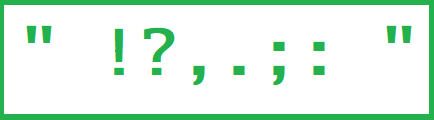
Do you know what grammatical duo are complete bullies? Quotation marks and punctuation. I hold this to be true because I feel like my editing journey can sometimes be entirely derailed by the gaslighting they provide. There are 6-ish rules for using them. There are 15-ish situations where you may have to stop and think about what you are doing and what the punctuation is saying. Here I’ll talk a little more about the ones that are most relevant to my day-to-day writing.

The first word in a direct quote should be capitalized, even when it doesn’t look like the punctuation suggests it should be. For example,

It was hardly a whisper, “Did you hear that?”

Except when you are splitting it up, of course, and are continuing a quotation already started earlier in the sentence.

“I was just thinking,” it was more to himself than her, “we’re not very well hidden.”

To boot, the above example also illustrates another point. When you are breaking up someone talking to interject additional information or context, induce a mental pause for people by slapping a comma at the end of the break. More clearly:

“Could you,” slowly the idea was coming to her, “reach behind that box,” her nod indicated which one she was talking about, “and get that board loose?”

Okay, okay, it’s not the most eloquent I’ve ever been, but it belabours the point and repetition is the key to remembering.

The comma continues to take the spotlight as we continue. When you have a direct reference to the person speaking, even if you think you want to use a full stop, it is not a full stop. It’s only a full stop after your preferred synonym for ‘said’.

“I think so,” he replied.

This comma rule *might* not apply if you are using the quotations for when the speaking character is quoting another character – quoteception, if you will. In this case, it’s entirely possible that there’s no punctuation at all until you are well away from whatever the quote within a quote is.

“Are you serious? There’s no ‘I think so’ about it! Yes or no!”

Now that I’ve spent an obnoxious amount of time talking about commas, let’s shift gears for a little bit. Let’s talk about more specialized punctuation, like question marks.

A question mark! Where do you put it? Always inside the quotation marks? Where all good punctuation gets tucked in? Not always.

If the speaker is asking specifically about a quote, then the question mark goes on the outside of the quote. So, what if you are questioning or seeking clarification about a question?

“Wasn’t it you that said ‘How bad could it be?’?”

Look how stupid that looks. I regret typing it with my own fingers. Luckily, that is not proper. Not the capitalization part, that’s proper, because ‘How bad could it be’ is a full and complete sentence by itself. If it was a fragmented thought or a partial quote, then it would NOT be capitalized. So, to accommodate the proper punctuation, it should have been:

“Wasn’t it you that said ‘How bad could it be’?”

The punctuation at the end, because it would legitimately be a double question mark, is just removed. If the quotation ends the speaking line, then typically, as a courtesy, you would end the quotation with the single quotation, leave a space, then end with the double quotation mark. Are you with me still? There are three things I want to talk about left, and I promise I’ll tie it up in a neat bow after.

“I can’t believe you’re blaming me! YOU’RE the one who suggested it! ‘It’ll be fun,’ you said!”

See that there? You thought we were done with commas, but they really are the star of the show here.

She adjusted herself as best she could against her bindings, and peered out through the slatted closet door. “Of course I said it would be fun! I was flirting with you! I was happy you seemed receptive!
“Besides. Don’t you think it’s kind of romantic to go somewhere scary? With someone you like, who offers to protect you from anything bad that might happen?” There was a chill to her tone.

When you’re splitting a person’s speech over a paragraph break, you leave the initial paragraph with open double quotations and begin the next paragraph with quotation marks again. This, as far as I can tell, is a simplified indicator to the reader that it is still the same person droning on. Like when you have them delivering an evil villain speech.

The last point is something I want to be careful about. Using quotation marks to indicate something’s name, or to indicate sarcasm. Too many times, people use quotation marks to emphasize things. Please never use quotation marks for emphasis. A great man said that. Weird Al Yankovic. If you go against those wise words, it makes people think there’s something wrong with the thing you are emphasizing.

“I can’t help it if my ‘friend’ hyped it up! She said it was popular! ‘Teen Scene’ ran a whole article on it,” his cries echoed loudly. Footsteps, heavy on the old wooden floors, started approaching.

When you read that, you didn’t think that the person who recommended this was *really* a friend, did you? ‘Friend’ being in quotations immediately implies sarcasm. Hopefully, I can hammer home my point with the following example:

If you put out a cup of bucatini (a long spaghetti-like pasta with a hole running all the way down the middle) in a cup, it would be perfectly acceptable to label it “straws” WITH quotation marks. Why? Well, they sure as hell AREN’T straws, but they’ll work like a straw!

The difference between single and double quotation marks is for reasons of clarity. Since things within the speaking line still need punctuation to indicate that it is a quote or emphasized within the line, using the single markings is common practice.

Now! Remember when I said I would tie it all up for you in a nice little bow? This whole thing makes a passage. It includes most instances of quotation marks and their associated punctuation frequently used in creative writing exercises.

It was hardly a whisper, “Did you hear that?”
“I was just thinking,” it was more to himself than her, “we’re not very well hidden.”
“Could you,” slowly the idea was coming to her, “reach behind that box,” her nod indicated which one she was talking about, “and get that board loose?”
“I think so,” he replied.
“Are you serious? There’s no ‘I think so’ about it! Yes or no!”
“Wasn’t it you that said ‘How bad could it be’?”
“I can’t believe you’re blaming me! YOU’RE the one who suggested it! ‘It’ll be fun,’ you said!”
She adjusted herself as best she could against her bindings, and peered out through the slatted closet door. “Of course I said it would be fun! I was flirting with you! I was happy you seemed receptive!
“Besides. Don’t you think it’s kind of romantic to go somewhere scary? With someone you like, who offers to protect you from anything bad that might happen?” There was a chill to her tone.
“I can’t help it if my ‘friend’ hyped it up! She said it was popular! ‘Teen Scene’ ran a whole article on it,” his cries echoed loudly. Footsteps, heavy on the old wooden floors, started approaching.

So tell me! Is something like this helpful? Do you have your own ways of remembering the many rules of punctuation and quotation mark bullies? If you have a clear way of explaining the dreaded colon and semi-colon, I’m looking forward to hearing it!

Resources

Make a “Top 5 Tracks” List

Jobs that pay by the word are common. In those cases, bust out your inner Victor Hugo or Kronk from the Emporer’s New Grove. “And here you have a moment of confirmation – the poison. The poison for Kuzco. The poison chosen especially to kill Kuzco. Kuzco’s poison. That poison?” Some companies pay 3 CENTS a word. THREE cents. If they’re going to be like that, pull out all the stops. Craft beautifully written, 12-line sentences.

I want to talk about one of my favourite editing techniques for when the word count does not influence your pay. The “Top 5 Tracks” technique.

By default, I am a fairly wordy writer. I write things out like I am talking to someone face to face. My punctuation tends to indicate where, in my mind, a speaking voice would pause. I’m sure my university professors loved receiving my essays that were NOT concise and NOT succinct.

Please take a moment of silence for the head writer in my department. She is likely one more instance of a comma splice away from throwing her whole computer at me.

So what is this editing technique that from the sounds of things, has nothing to do with punctuation?

Have you ever been speaking with someone and suddenly noticed they say ‘um’ or ‘like’ a lot? This technique is like calling yourself out for exactly that behaviour.

Pick five words that “weaken” your writing. Ones you know you are bad for. Here are mine:

WORD:WHY’S IT BAD:
ThatNine times out of ten, when I delete it, the sentence doesn’t change. At all.
Sort ofNine times out of ten, when I delete it, the sentence doesn’t change. At all.
JustNine times out of ten, when I delete it, the sentence doesn’t change. At all.
VeryNine times out of ten, when I delete it, the sentence doesn’t change. At all.
ReallyNine times out of ten, when I delete it, the sentence doesn’t change. At all.

Do you see where I’m coming from?

If we were to talk in person, I’m SURE a quarter of my vocabulary would be those five. (Not really, but it feels like it.)

Now, you may be thinking to yourself “yes. There are many words that water down sentences.”

I agree! A quick google search of “weak words” will show you hundreds of articles detailing which words you should or should not use, ways to catch yourself, things to replace, etc. I have a problem with absolutes, so I don’t like this. Case in point, many guides out there will tell you not to use adverbs ending in -ly. At all. Because it’s telling instead of showing. Okay, but sometimes it fits the tone! Sometimes I’m going for a tone! Or sometimes, the moment is not important enough for me to expect the reader to pick up on the subtleties of the context cues! For example, what if the maid gently excused herself? What if I just want to say that and move on, rather than describing her movements when she’s not an important character?

With that being said, this is where the Top 5 Tracks comes in. Review your writing. Read a few articles about weak words. I’m sure you will find one or two you KNOW you overuse. If you don’t, try using CTRL + F on something you’ve written recently, and start testing words. The results might SHOCK you.

The articles you may read during your research will outline anything from 4 to 600+ words experts and professionals caution not to use. Know what’s going to be impossible to remember? An arbitrary number of words you may or may not be in the habit of using. This is why you pick the biggest offenders.

Biggest offenders are going to fluctuate depending on genre and style, but should be fairly (Adverb ending in -ly, take that list!) stable for each individual. Pick five of the ones you have trouble with, and focus on those.

CTRL + F within your document for each of the 5 offenders and delete them, or judge them an exception.

“What? Don’t just delete them!?” No! Because look! There’s a “just” in that sentence, and if you deleted it, you’d lose your meaning! “Don’t delete them” implies that you keep them all! “Don’t just delete them” implies that there are additional steps to consider before the action is taken. I guess you could reword it. “What? Don’t delete them without consideration!?” Which I guess gets the point across, but all this to avoid the word ‘just’? Why?

Especially when the words you are using are common, you can’t wholesale delete things.

So.

Read a bunch of your work, pick your Top 5 Tracks, and happy editing!

References

Book Review – March 23rd

Memoirs of a Geisha – Arthur Golden

Rating: 2 out of 5.

Hello friends! We have a theme! I also took a long time to decide if I was going to review THIS book! Now, let me back up. For those that have read my blog post about the books I would like to read this year (which can be found here), you may be looking at this post and your calendar. You are right, Memoirs of a Geisha was scheduled for May, not for March. The Master and Margarita was scheduled for March.

Yeah. About that.

Apparently, everyone and their dog wants to read that right now. When I searched for it, there were already TEN holds on it. My library system is pretty good, but they only have 2 copies of the damned thing. As of writing this, I am hold five of eleven, so there is some hope that I can have it by the end of May. In similar news, since I am skeptical that I will like many of the books on my list, I am not purchasing them.

This book kind of underlines why.

First, I want to address the lawsuits that surrounded the author, Arthur Golden, after the publication of this book. For those of you that don’t know, Geisha culture is a fairly tight-lipped affair, so speaking out about practices, norms, expectations, and events hasn’t been very widely approved of. Golden’s Memoirs certainly spurred a flurry of information and fact-finding, but I honestly can’t say it was for the right reasons.

One of the women that Golden interviewed for background had requested that her identity remain a secret. That was not respected as he thanked her in the acknowledgements, and although I’m sure the author meant well, caused a lot of problems for this woman. She received death threats and it caused a strain on her interpersonal relationships. Golden was sued for breach of contract and ended up settling out of court for an undisclosed sum.

Now that I’ve mentioned that, please buckle in for a not-very-friendly review.

Do you remember the book “A Million Little Pieces”? Do you remember how it was marketed as a memoir, but then a little while after, it came out that the author James Frey was making his story more dramatic so it had to be remarketed as general fiction and/or misery literature?

Memoirs felt a lot like that, but more… amateur. Like you know those fanfictions you wrote in high school, where you shamelessly self-inserted yourself into a story and your love interest of choice notices you for your *whatever trait you choose*? Your voice, your hair, your eyes, your singing, your height? Well, that’s sort of how this started. Everyone notices Sayuri’s eyes. They’re pale and unusual.

Now, I don’t typically mind this, because people are unusual! People have a lot of cool traits! There’s usually something of someone to look at and appreciate! I’d be lying if I said I wasn’t sucked into the story in the first few chapters. However, the moment Sayuri gets to Gion, everything goes downhill and the entire rest of the story made me increasingly more uncomfortable.

When I ranted to my partner about the plot, he summed it up really nicely by offering me “Sounds like it’s a whole book of terrible people making terrible choices.” It’s not ALL really that bad, but… I found myself unable to get much evidence to the contrary.

I typically try my best to read a book objectively. Just because I don’t like the plot, doesn’t mean that I think the book is bad. So why then, did this super popular book get such a low rating from me? I alluded to it in the paragraph talking about fanfiction. Arthur Golden has a degree in art history, in Japanese history, and one in English. He interviewed Mineko Iwasaka for her deep knowledge and involvement with the Geisha lifestyle.

AND YET. Some of the language and connections that he used and made felt like he had learned about certain aspects of life in an okiya and as a Geisha, and then just ran away with them. Some may argue “yes. That is what fiction is. You learn about something, or you speculate on something, and you write about it.” Which yes. Yes, that’s how that works. I’m not arguing that. What point I hope to slide in here is that when you are writing something on a topic that’s so tight-lipped, you have to be careful which face you decide to show in your writing. The book was written for an English audience, and how do you think people received it when he compares Geisha to escorts and prostitutes? He allegedly rewrote Memoirs three times, each from a different perspective, until he settled on Sayuri’s.

To Golden’s credit, Sayuri is believable as a narrator. Her personality is consistent throughout the book (almost to a fault) and you go through the book (mostly) being able to get behind her motivations. Not all authors can say that, especially when the author is writing a gender that he does not identify as, from a culture that he does not identify with.

What all this blather is trying to say is: Arthur Golden writes his book very well, on a topic that was done not very well.

It’s sort of like the uncanny valley. The book falls too much into ‘realism’ to be completely dismissed, but aspects of it are so squidgy and uncomfortable that it’s hard to completely settle into it.

All in all, take it as it is – fiction, and maybe watch the equally problematic cinematic release featuring Chinese actresses and save yourself some time.

References:

English – Why Are You Like This?

Would you like to know what this post was supposed to be about? This post was supposed to do a bit of an outline on when to use spacing in your words versus when you should leave them together. I spent a little while brainstorming what kind of words I wanted to use as examples and I was all prepared to write them up and discuss if there was some hard and fast rule of when to use them together versus spaced out.

Instead, I found myself down this rabbit hole of word definitions.

Let me explain.

The words that my brain goblin really likes to second guess are things like into/in to, onto/on to, altogether/all together, ahold/a hold, setup/set up, onboard/on board, and nevermind/never mind.

So first. Things like in and on are usually prepositions. For those that need a reminder, a preposition is the part of a sentence that will explain where in relation to another thing the subject is. For example, Mary is on the bed. Mary is the subject, and ‘on’ dictates where she is in relation to the bed. If we change the preposition to ‘in’, that adjusts our understanding of where Mary is. In the first example, she exists on the bed as a whole. Once it is changed to ‘in’, this implies that she is likely under the covers as she is now inside the bed as a whole. Unless there was an unfortunate murder, it is safe to say that ‘in’ the bed would only be comfortable if you were in amongst the blanket parts.

Okay sweet. Now how about in to vs into? Well, into is also a preposition. Usually. If we stick with the example from the last paragraph, Mary can get into bed, just as she is in bed. This is just the difference between whether it is an action that you are talking about, or whether it is the location you are talking about. Can you bring the groceries into the house? Otherwise, if you want to know where the groceries are, they are in the car, because no one’s brought them inside yet.

I have two rules of thumb here because there are always exceptions to the rules of how you use these words and using the two of them together is ALMOST foolproof. (Except for English deciding that to shapeshift, or to undergo metamorphosis is to change into something else. That’s a rant for another day.)

Rule ONE: Is the space, concept, object, or state something you can abstractly or concretely put your subject in or access? Shock, kitchen, desk drawer, meditation. She went into shock. She went into the kitchen. She went into the desk drawer. She went into meditation.

Rule TWO: Can you put a comma between ‘in’ and ‘to’ and it still makes sense as proper English and doesn’t change the meaning? Shock, kitchen, desk drawer, meditation. She went in, to shock. To shock what? Not a sentence. She went in, to the kitchen. She went inside the house. She stood like a sim, aimless at the kitchen border, not entering, just staring. Okay, I’m sure someone somewhere used that as a real sentence, but hopefully, you’re picking up what I’m putting down? She went in, to the desk drawer. Again, she goes there and just stands, staring at the drawer. Maybe she doesn’t have a key. She went in, to meditation. This isn’t conjugated properly so is not a sentence.

Happily, everything I’ve said above applies to ‘onto’ vs ‘on to’ with the adjustment of instead of the subject being abstractly or concretely being able to be in or access, the subject can be placed abstractly or concretely on top of something.

This sadly does not carry over to altogether, all together, ahold, a hold, setup, set up, onboard, on board, nevermind, and never mind!

Before anyone says anything about these all being conjugated words versus prepositions, no. Up and on are prepositions.

So let’s take all together and altogether. Different words. Because sometimes language be like that. Altogether is an adverb. If you can replace it with ‘wholly’ or ‘completely’, you are using the right form. All together is an adverb, modified by a determiner. If you remove “all” and the sentence still more or less makes sense, then you’ve got it. If it no longer makes sense, perhaps you should be using ‘altogether’.

Example! Mary was altogether fed up with John’s behaviour. Mary was all together fed up with John’s behaviour. Mary was ‘completely’ fed up with John’s behaviour sounds okay, but Mary was together fed up with John’s behaviour doesn’t make much sense. The correct usage is then ‘Mary was altogether fed up with John’s behaviour.’

Example again! The group was excited to be altogether again. The group was excited to be all together again. The group was excited to be ‘completely’ again does not make sense, but the group was excited to be together again makes sense. The correct usage is then ‘The group was excited to be all together again.’

Are you still with me? This is turning out to be a long one. In an effort not to waste your time with filler and fluff, I’m heading right into talking about ‘setup and set up’.

Setup is the noun. Person place or thing. Set up is the verb. Action, occurrence, or state of being. You can be set up because you are the subject and the thing is happening to you. You can’t be setup. You are not a computer, and you do not need all your settings adjusted to function. A smart toaster that is voice-activated can be set up (placed upright on a surface) and requires setup (programming to toast your toast and recognize your voice). If you yourself are not this toaster, you can’t be both.

Now for another relatively straightforward one with a bonus hyphenated occurrence! Onboard has the corporate definition of training people and amalgamating them into a company’s structure and ideologies. On-board reflects the location of something within a vessel that travels over land, through the sea, or in the air. On board is the term for being present in the vessel whether it is moving or stationary at the time. If you are thinking you don’t see that much difference between the last two, the third example is when it is used as a preposition, and the second is when it is used as an adjective. I don’t have a trick for this one. I looked for a few days to see if the internet had anything better to say but came up empty. I’d love to hear from you if you have something that works for you!

I will start the next section with a little filler and fluff. This choice might have been made because there’s no point in pretending I’m perfect and just know all this stuff. Guess what I learned while I was researching my little trouble phrasings?

That I should not be using ‘nevermind’. Like, ever. Why? Because it currently belongs specifically to the turn of phrase ‘no nevermind’. Haven’t heard of it? No. Me neither. Apparently, if something is bothering you, someone may tell you to pay it ‘no nevermind’. I’ll let you draw your own conclusions on this one. I personally don’t know how I feel about it.

The last combo I had on my little list was ‘a hold’ vs ‘ahold’. I debated leaving it out because it’s a slippery slope between accepting ‘ahold’ as a word, and accepting ‘alot’ as a word which I am absolutely against.

In fact, please see exactly how I feel in the timeless Hyperbole and a Half blog.

http://hyperboleandahalf.blogspot.com/2010/04/alot-is-better-than-you-at-everything.html

Ahold is an informal word that has been recognized by dictionaries. You can use it in the context of grabbing ahold of something or getting ahold of someone. What I want you to notice is that in both cases, the ‘ahold’ is followed by an ‘of’. This is it. This is the whole trick. If the phrasing is ‘This television show has a hold on me’, you can’t replace ‘a hold’ with ‘ahold’, there is no ‘of’! Since ‘ahold’ is informal anyway, if you are ever unsure, err on the side of ‘a hold’!

So there you have it. Something that was supposed to take me a few hours this weekend to type up and get ready for you ended up taking much longer and now has me questioning everything English does. I hope you found this interesting or useful, and I would love to hear about the words that sometimes give you trouble, or if you have any tricks to share about the above!

REFERENCES

Book Review – February 18th

Fahrenheit 451 – Ray Bradbury – Introduction by Neil gaiman

Rating: 4 out of 5.

“Fire is bright and fire is clean”

Captain Beatty

Hello all. I want you to know that I took a long time to decide if I would review this book. Not because I didn’t know how I felt about it, but because I would have to tread carefully if I yelled my opinion out there for everyone to read. Even with my currently small audience. But hey. This is my blog. If there’s a place where I should be able to say what I think, it’s here.

It’s not controversial, it’s not hating on anything, it’s just a really relevant topic in today’s polarizing media.

For those who have NOT read Fahrenheit 451 or have not seen the movie, it is set in a dystopian future where it is illegal to read books. Instead of putting fires out, firemen are a squad of people who, when books are discovered in someone’s otherwise fireproof house, SET fires to get rid of the illegal material. As the story progresses, our protagonist expresses his solidifying dissent with the order of things. He makes a choice and receives consequences for this action. How’s that for talking about the book without giving any spoilers?

First, I want to comment that during the climax of the story, there is a very blatant social commentary about feeding people a conclusion that feels nice, and that they would expect to see rather than the truth of the situation.

** LOOKS AT SOCIETY ** DOES that sound familiar!?

Second, I want to comment on the REASON why books became illegal. This is the part where I know I need to be careful. So, in that vein, I am stating the reasons, according to Captain Beatty.

“Don’t step on the toes of the dog-lovers, the cat-lovers, doctors, lawyers, merchants, chiefs, Mormons, Baptists, Unitarians, second-generation Chinese, Swedes, Italians, Germans, Texans, Brooklynites, Irishmen, people from Oregon or Mexico. The people in this book, this play, this TV serial are not meant to represent any actual painters, cartographers, mechanics anywhere. The bigger your market, Montag, the less you handle controversy, remember that! All the minor minor minorities with their navels to be kept clean. Authors, full of evil thoughts, lock up your typewriters.”

Ray Bradbury, Fahrenheit 451, Page 55, Captain Beatty

“Coloured people don’t like Little Black Sambo. Burn it. White people don’t feel good about Uncle Tom’s Cabin. Burn it. Someone’s written a book on tobacco and cancer of the lungs? The cigarette people are weeping? Burn the book.”

Ray Bradbury, Fahrenheit 451, Page 57, Captain Beatty

** LOOKs at society harder** how about now!?

We are supposed to be able to identify when something is bad. Bad things exist. Do we WANT them to exist? No. Bad things, by definition, are bad. But like I said in my post previously, if you only ever get one sociopolitical, socioracial, or socioeconomic viewpoint, how is reading supposed to broaden your horizons? If all of our books are neat, and perfect, and comfortable, how will we know how to deal with things that are uncomfortable when they inevitably happen in real life?

If you have some suggestions on the above, I’m all ears. Except for “Ignore all bad things forever and strive for societal perfection by destroying everything in our past that was bad and uncomfortable.” This advice will be yeeted so far out the window you may not even see it.

You have no power here. I’m from Canada. Know what Canadians did to the indigenous population? Do you know anything about residential schools? If not, please know that Canada has TRIED the ‘lets pretend it never happened and we are good people’ angle. Know what it caused? Broken homes. Trauma. Abuse. Neglect.

Spoiler?

Pretending that everything is fine and nice and we’ve never done anything wrong in our life? Doesn’t work.

We need to understand our societal development and be comfortable enough in our own progression to read something from the past, or something that might be controversial, and say ‘Hey. Here is a viewpoint. Let’s discuss it.’

So why then, did this book only get four stars if I identified so strongly with the message? Even though it was published in the 1950’s and I’m saying it applies to us even SEVENTY YEARS LATER?

I felt the ending had a bit of a ‘rocks fall and everyone dies’ ending.

Yes, shh, it’s symbolic of the progression of society and Montag’s journey forward and transitions into new worldviews and perspectives. We still dropped a bomb on the town and killed everyone. Rocks fall. Everyone died. I didn’t like it. I thought it was abrupt. 4 stars.

If you’ve read this book, I’d love to know what you thought about it, and if you identified with it as strongly as I did. Alternately, I have NOT seen the movie, so I would be interested in learning what the tone was!

If someone tells you what a story is about, they are probably right. If they tell you that is all a story is about, they are very definitely wrong.

Neil Gaiman

12 Books You HAVE to Read Before You Die!

Okay, okay. The title is clickbait. No one cares if you have read these twelve books, and nothing in your life will be harmed if you’ve never heard of these books. Except maybe April’s read – it depends on how many nerds you know and interact with.

So I don’t know about you, but I hated the time in high school when they would demand we read certain books. They said it was important. That the ideas in them were integral to our manifestation of self to think about. Be made aware about. Animal Farm, One Flew Over the Cucoo’s nest, the Catcher in the Rye, Life of Pi, and the Giver are the titles that stick out in my mind. And I’m going to add my thoughts as a grain of sand in an entire opinion beach full of other people’s grains of sand.

The Giver? I couldn’t tell you what that was about. I think it made me sad and frustrated at the end so I put it out of my head. “But Emma,” you might say. “The book was supposed to evoke feelings!” Okay, cool, but my child-self did NOT like sad books and as such I said “Thank u next” to whatever that lesson was.

Life of Pi? A child deals with the trauma a series of unfortunate events evokes by referring to everyone as animals and takes a really depressing sea voyage. Obviously that’s been paraphrased within an inch of its life, but you get the idea. A bunch of people thought it was an important enough story to make it into a movie, so that’s cool. I don’t know, I’m not sure what they were trying to teach us with this one. Maybe just deal with your trauma as much as you are able?

The Catcher in the Rye? I have no idea. Some kid skips school and wanders around and thinks about things. It’s supposed to be a ‘coming of age’ story. I can’t decide if the coming of age is just an outdated concept within the narrative, or if I didn’t get it because I’m a girl.

One Flew Over the Cucoo’s nest. This doesn’t even get a question mark at the end. Did it make me think? Yes. It made me think about how terribly we treat other people, how terribly we have treated other people, and how shitty it was to have any kind of “mental illness” in the past.

Animal Farm? This one I got. I thought that it should have been taught in social studies/humanities/history; whatever it’s called where you’re from. Where should it have gone in the curriculum? Right before you learned about the holocaust and all the terrible things that were done there. Or right before you learned about residential schools and all the terrible things that were done there. Or right before you learned about any other genocide! Cultural, racial, religious, I give 0 fucks which. Too many people have the “Well it wouldn’t happen here and now” mentality, but surprise! It’s happening right now! Giving a plain example of the small changes and slimy pitch tactics required from politics to completely change a country’s mentality will never stop being important.

Where was I going with this? Oh right. Sorry, I got on a little tangent there. Let me just get down off of my soapbox.

Books. You might be looking at the above and thinking to yourself “Well this girl hates reading if she has such a low opinion of those books.”

BUT JUST WAIT, THERE’S MORE!

I stumble upon lists with dramatic titles such as “100 books to read before you die” and “10 most popular books of 2023, how many have YOU read?” and “You can’t count yourself a lover of classics if you haven’t read these 50 titles!”.

Normally, I don’t really pay attention to these outrageous claims. I don’t really care what I ‘should’ and ‘should not have’ read and what I should have taken away from each experience. Do you want to make someone hate reading? Give them a huge list of titles that were written between 1800 and 1920. Tell them that if they don’t make it through the list, they can’t say they’re a reader. Boom. Resentment.

This year, I decided to take a look at the books that were currently being harped on as ‘must reads’ and you know what? I was pleasantly surprised. I think the last time I looked at similar lists was in 2008. Spoiler, back then 95% of all the titles were written by old white male Europeans. The other 5% was a white Englishwoman and like… 3 people of colour from Europe. This year? I saw a lot more diversity. It’s a good trend people, keep it up.

One more thing I should probably go over is that I’m white. I’m SO white. I have a Ukrainian background, but I was born and raised in Canada. My parents were born and raised in Canada. Half of my Grandparents were born and raised in Canada. My Great Grandparents were from Ukraine and surrounding areas. But I’m still white enough to make mayonnaise jealous and I’m not connected enough with my heritage to claim to be anything aside from Canadian. That DOES NOT MEAN I want to read a whole bunch of old white guy literature. It may be really good stylistically or thematically, but if you only ever get one sociopolitical, socioracial, or socioeconomic viewpoint, how is reading supposed to broaden your horizons?

Thank you for coming to my Ted Talk, hosted out here remotely on the hill I will die on.

So you’ve stuck with me to this point, I’ll deliver the goods. I picked 12 books that showed up repeatedly on ‘should read’ lists from multiple sources, and I assigned them all to a month of 2023.

MONTHTITLEAUTHORYEAR PUBLISHEDPAGE COUNT
JANUARYThe Count of Monte CristoAlexandre Dumas18461250
FEBRUARYFahrenheit 451Ray Bradbury1953250
MARCHThe Master and MargaritaMikhail Bulgakov1967430
APRILThe HobbitJ. R. R. Tolkien1937310
MAYMemoirs of a GeishaArthur Golden1997450
JUNEDon QuixoteMiguel de Cervantes16201100
JULYThe Time MachineH. G. Wells1895100
AUGUSTOne Hundred Years of SolitudeGabriel García Márquez1967410
SEPTEMBERMoby DickHerman Melville1851430
OCTOBERCirceMadeline Miller2018400
NOVEMBERJane EyreCharlotte Brontë1847540
DECEMBERPride and PrejudiceJane Austen1813430
2023 book a month reading list

Yes, there are still a lot of white men on this list. Yes, there are some titles on there that I personally feel I should have read by now. Take, for example, Pride and Prejudice. I’ve only had a copy sitting on my bookshelf for 10 years. Have not read it yet.

At the time of writing this, I somehow managed to make it through the Count of Monte Cristo in January. Fahrenheit 451 is in my hot little hands and things are looking good to be done in February. The Master and Margarita has a huge waitlist in my local library, so we’ll have to see if I manage to get it for March.

I’m simply not going to write a review about the Count of Monte Cristo in this blog. It’s not going to happen. The rest of them I’m hoping to cover in an alternating fashion with grammar advice and other writing tidbits.

Why does the Count of Monte Cristo get the boot? Honestly, I started to write one up, but it went all over the damn place. There’s so much that happens. To talk about any one particular part that’s not strictly structure, thematic timing, and/or literary style, you have to set up the whole damned plot. At the end of the day, you can go read a review for this book that covers the structure, timing, style, etc from someone much smarter than me, or who has a fancy degree from a nice university. Spark Notes or Wikipedia will provide you with the plot. Myself? If I know people who like Sherlock Holmes, I’ll tell them to read it. Otherwise, I probably will just wear my badge of honour for getting through 1250 pages in 3 weeks while working a full time job and also not becoming a hermit.

I’d love to hear other people’s reading lists for this year, or suggestions of things I should check out!

If you have the time or the brainpower, leave me a comment about it!